
Emerald Properties and Care
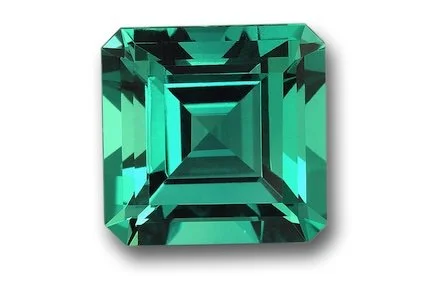
Emerald
Physical Properties
Mineral family: Beryl. Emerald is the green variety colored primarily by chromium and sometimes vanadium.
Color: Range from light green to deep, vivid green; the most prized are saturated, vivid green with even tone and minimal gray or brown.
Clarity: Commonly included; natural inclusions (called jardin) are typical and often accepted as part of a genuine emerald’s character. Eye-clean specimens are rare and highly valuable.
Hardness: 7.5–8 on the Mohs scale. Hard enough for everyday wear, but less durable than sapphires and diamonds.
Toughness: Generally poor to fair because of inclusions and internal fissures; susceptible to chipping, cracking, and breakage from sharp blows.
Specific gravity: About 2.67–2.78.
Refractive index: Approximately 1.576–1.582 (uniaxial negative with weak birefringence).
Treatments: Many emeralds are oiled or filled (commonly with cedar oil or synthetic resins) to improve clarity and appearance. Disclosure of treatments is standard practice in the trade.
Sources: Historically Colombia, also Zambia, Brazil, Afghanistan, Pakistan, Russia, and others.
Metaphysical properties
Across cultures and centuries, emeralds have carried rich symbolic and spiritual weight. Some of the most enduring associations include:
Wisdom & truth: Ancient Egyptians linked them to Thoth, god of wisdom, and believed they revealed truth to those who wore them.
Love & fertility: Sacred to Venus/Aphrodite in Greco-Roman tradition, they were seen as stones of the heart, fidelity, and renewal.
Foresight & prophecy: Medieval European lore held that emeralds could grant visions of the future and expose illusions or deception.
Healing: Long associated with the eyes and sight (perhaps due to their color), as well as the heart chakra in Hindu and New Age traditions, representing balance, growth, and compassion.
Protection: Carried as talismans against evil spirits, poison, and misfortune across Persian, Indian, and Mesoamerican cultures.
In lapidary tradition, emerald is the birthstone for May and is tied to the astrological signs Taurus and Cancer — a stone of spring, growth, and the enduring green pulse of life.
Care and maintenance
Wear precautions: Although relatively hard, emeralds can be brittle due to inclusions. Avoid wearing emerald jewelry during activities involving impact, pressure, or rough handling (sports, gardening, heavy labor).
Temperature and chemicals: Avoid sudden temperature changes and exposure to household chemicals, cosmetics, perfumes, and ultrasonic cleaners. Heat or harsh chemicals can worsen fissures or remove oils/resins used for clarity enhancement.
Cleaning: Use warm water, mild dish soap, and a soft brush. Rinse thoroughly and dry with a soft cloth. For heavily included or oiled stones, steam and ultrasonic cleaning are not recommended unless a professional gemologist confirms the treatment can withstand it.
Professional maintenance: Have emerald jewelry inspected regularly by a qualified jeweler to check settings and to assess the condition of any oils or fills. Re-oiling or re-treating may be recommended to maintain appearance.
Storage: Store emeralds separately from harder gemstones (like diamonds) to avoid abrasion. Wrap in a soft cloth or keep in a padded compartment.
Re-cutting and repair: Because inclusions can complicate cutting and setting, any re-cutting, drilling, or repair work should be done by an experienced lapidary or jeweler familiar with emeralds.
Emeralds combine striking green color and historical symbolism with physical fragility due to common internal inclusions. With mindful wear, gentle cleaning, and periodic professional care, emerald jewelry can remain beautiful for generations. Metaphysically, emeralds are widely regarded as stones of the heart, renewal, insight, and abundance.